
Recognise a stroke with FAST, why the first hours matter, how physiotherapy helps paralysis recovery, how Parkinson’s disease is treated, and the real causes and treatment of peripheral neuropathy.
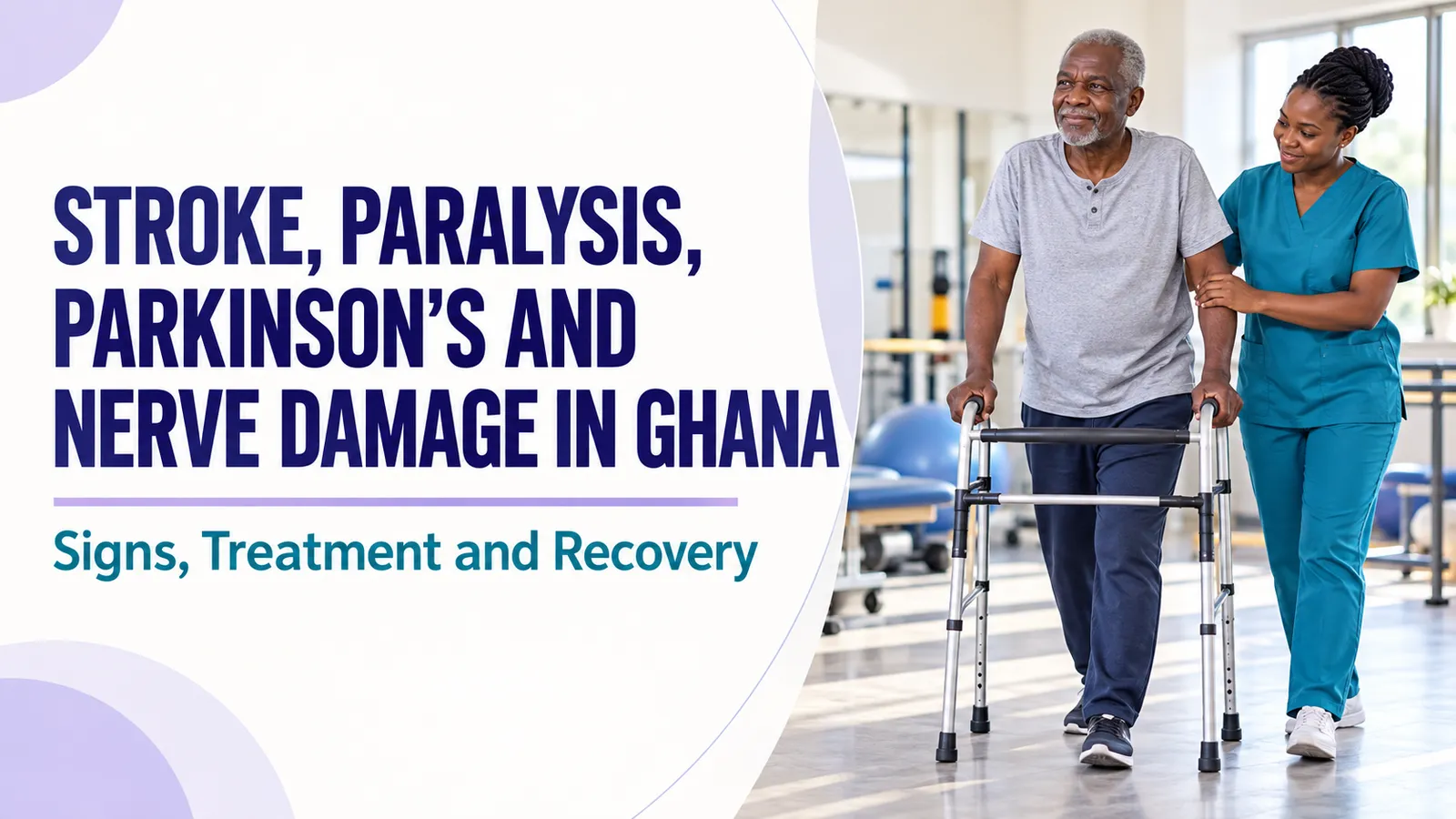
Stroke is one of the leading causes of death and disability in Ghana, and families often spend heavily on “paralysis medicine” after one. The truth is hopeful but different: fast hospital care limits brain damage, and rehabilitation (physiotherapy, speech and occupational therapy) is what helps people walk, talk and live independently again. No supplement reverses a stroke.
Recognise a stroke: think FAST
- Face: drooping on one side?
- Arms: weakness or numbness in one arm?
- Speech: slurred or confused?
- Time: call 112 or go straight to the nearest hospital with a CT scanner.
Other signs: sudden loss of vision, severe headache, loss of balance. Even if symptoms pass quickly (a “mini-stroke”), get checked the same day; it is a warning.
Why the first hours matter
For the most common type of stroke, clot-busting treatment works only within a few hours. A CT scan shows whether the stroke is from a clot or bleeding, which need opposite treatments. Never give herbal mixtures, food or drink to someone who may have trouble swallowing.
Recovering from paralysis
- Physiotherapy should start early, ideally while still in hospital. Most recovery happens in the first 3–6 months, but improvement can continue for much longer.
- Speech therapy helps with talking and swallowing; occupational therapy with daily tasks.
- Family can learn exercises to do at home every day.
- Preventing another stroke: control blood pressure, diabetes and cholesterol, take prescribed medicines (such as aspirin or statins when advised), stop smoking, limit alcohol.
Paralysis can also follow spinal injuries, infections or nerve conditions; each needs its own specialist assessment.
Parkinson’s disease
- Signs: a resting tremor, stiffness, slow movement, shuffling walk, small handwriting, soft voice.
- Diagnosed by a doctor or neurologist through examination.
- Medicines such as levodopa greatly improve movement. Exercise, physiotherapy and good sleep help too.
- It is not cured, but people often live many active years with treatment.
Peripheral neuropathy (nerve damage)
- Signs: burning, tingling, numbness or pain in the feet and hands.
- Common causes: diabetes, vitamin B12 deficiency, heavy alcohol use, HIV and some medicines.
- Treatment means finding and treating the cause: controlling blood sugar, correcting B12 if a blood test shows it is low, and medicines for nerve pain.
- Check your feet daily if you have numbness; small wounds can become serious.
Frequently asked questions
Is there medicine that cures paralysis after stroke?
No pill cures it. Recovery comes from early treatment and consistent rehabilitation. Products promising to “reverse paralysis” waste precious recovery time.
Can a stroke patient recover fully?
Many recover substantially, especially with prompt treatment and daily therapy. Outcomes depend on the stroke’s size and location.
Do vitamins help nerve damage?
Only if you are deficient. A blood test can check B12; taking vitamins without a deficiency does not repair nerves.
Related: hypertension and heart disease and diabetes.
Medical disclaimer: This article provides general health information and does not replace professional diagnosis or treatment. If you suspect a stroke, call 112 or go to hospital immediately.
 Hypertension and Heart Disease in Ghana: Warning Signs, Chest Pain, Blood Clots...
 Diabetes in Ghana: High Blood Sugar, Type 2 Diabetes and Cholesterol Treatment E...
 Syphilis Treatment in Ghana: Symptoms, Testing and the Medicine That Cures It
These guides are general information. For diagnosis and treatment, see a qualified health professional.

About the Author
Isaac Mintah
Entrepreneur, Author & Emotional Intelligence Coach. Founder of Activezoon Universal Limited Company.
Grab a Copy
Emotional Intelligence For Career Growth
Isaac Mintah's flagship book — get your copy now from Amazon or Jumia Ghana.
Leave a comment
Your email address will not be published. Required fields are marked *